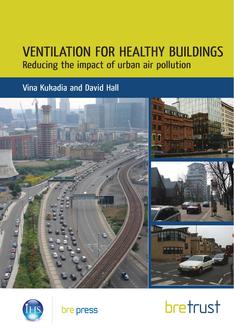
Name:
BRE IP14/01 PDF
Published Date:
01/01/2001
Status:
[ Active ]
Publisher:
Building Research Establishment Limited
Introduction
The required service life of timber used in construction is usually specified in decades. Different timber species vary in their natural resistance to attack by wood-destroying fungi and, where necessary, this resistance (or natural durability) can be enhanced by the application of a preservative treatment. The BRE field testing programme was established in 1929 and has been maintained as a continuous programme of evaluation and additions ever since. It provides the UK national database for the natural durability of important commercial timber species and for the performance of wood preservatives, especially of new systems as they become available for industrial use. The results derived from these tests augment the national database, enabling it to be used to benchmark new products, processes and systems for improving the durability of timber used in construction applications.
In recent years, two new issues have arisen that emphasise the significance of this database. The first results from changes in worldwide forestry practices, including forestry plantation management; these have resulted in current timber supplies increasingly coming from trees grown under substantially different conditions than previously which can affect the natural durability of the timber. Furthermore, measures to get better value and utilisation from forest production have increased the availability and potential commercial importance of lesser-known timber species that, until now, have had no market in the UK. These new species must be evaluated for enduse applications in order to create markets for producer countries, encourage more sustainable use of forests and protect the interests of UK consumers.
The second issue relates to environmental concerns; this includes the use of chemicals considered as toxic and emissions of organic solvents into the atmosphere. These concerns are driving a change towards alternative active ingredients for wood preservatives, the wider use of water based preservative formulations and towards new processing technologies for enhancing wood durability. It is essential that these new developments are fully evaluated and compared with proven commercial products to ensure that they are fit for purpose. Recent BRE ground contact trials include several new products and processes but results reported here concentrate on tests of the improvement in the protective efficacy of copper/chromium/arsenic (CCA) in spruce following pretreatment incising to increase penetration.
The likelihood of timber being decayed by wood-destroying fungi during its service life depends on the circumstances of its use. Factors such as contact with the ground and exposure to water or atmospheric moisture increase the potential for decay. The risk of decay in timber used in contact with the ground (eg as a fence post) will be much greater than the same timber used out-ofground- contact (eg in a window frame). A rating system for classifying the hazard class of the service conditions, on a scale of 1 to 5, is specified in BS EN 335-1: it is important that the tests used to determine the service life of timber appropriately reflect the relevant service conditions of its intended use. The BRE field trials database relates specifically to Hazard Class 4 (ground contact)
Several British and European standards tests have been developed to cover the classification of the natural durability of different timber species as well as to evaluate the effectiveness of preservative treatments. The test requirements and durability classes (Table 1) are given in BS EN 350-1. Much of the early material in the BRE test programme predates these standards and, in many cases, the methods specified in the standards have been based on those developed at BRE, and on BRE's information database and experience.
| Edition : | 01 |
| File Size : | 1 file , 250 KB |
| Number of Pages : | 8 |
| Published : | 01/01/2001 |