Name:
Characterization of selected plants that contain or may be adulterated with aristolochic acid PDF
Published Date:
01/01/2004
Status:
Active
Publisher:
American Herbal Pharmacopoeia
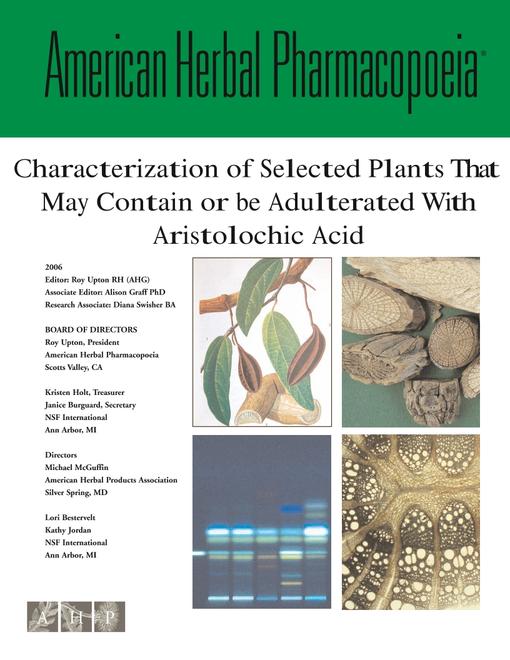
This is the culmination of a multiple-year project of AHP in collaboration with the American Herbal Products Association (AHPA), State Food and Drug Administration (SFDA, China), and Therapeutic Goods Administration (TGA, Australia), and with cooperation of the Food and Drug Administration (FDA, United States). AA is a potent nephrotoxin and carcinogen that is naturally occurring in some plants that have been used in traditional systems of medicine. The mix up of AA-containing plants with those that are normally safe has resulted in more than 100 kidney failures resulting in dialysis and many fatalities in relatively recent years. This work provides multiple analytical methods for assuring the authenticity, purity, and quality of the primary botanicals found in trade that contain AA or that are AA-free but may be adulterated with botanicals that contain AA. The document includes full-color macro- and microscopic photographs, line drawings of microscopic characters, identity tests, and full-color HPTLC plates. According to AHP executive director Roy Upton, "The problem of AA toxicity has been acknowledged internationally and through this international collaboration a part of the solution has been provided. Industry and regulators can use the tools provided to prevent the unintentional trade of AA-containing plants and make definitive determinations regarding the identity of those non-AA-containing plants that are otherwise safe."
The mix up of AA-containing plants with those that are normally safe has resulted in more than 100 kidney failures resulting in dialysis and many fatalities in relatively recent years. This work provides multiple analytical methods for assuring the authenticity, purity, and quality of the primary botanicals found in trade that contain AA or that are AA-free but may be adulterated with botanicals that contain AA.
The document includes full-color macro- and microscopic photographs, line drawings of microscopic characters, identity tests, and full-color HPTLC plates. According to AHP executive director Roy Upton, "The problem of AA toxicity has been acknowledged internationally and through this international collaboration a part of the solution has been provided. Industry and regulators can use the tools provided to prevent the unintentional trade of AA-containing plants and make definitive determinations regarding the identity of those non-AA-containing plants that are otherwise safe."
Table of Contents:
| File Size : | 1 file , 61 MB |
| Number of Pages : | 217 |
| Published : | 01/01/2004 |


