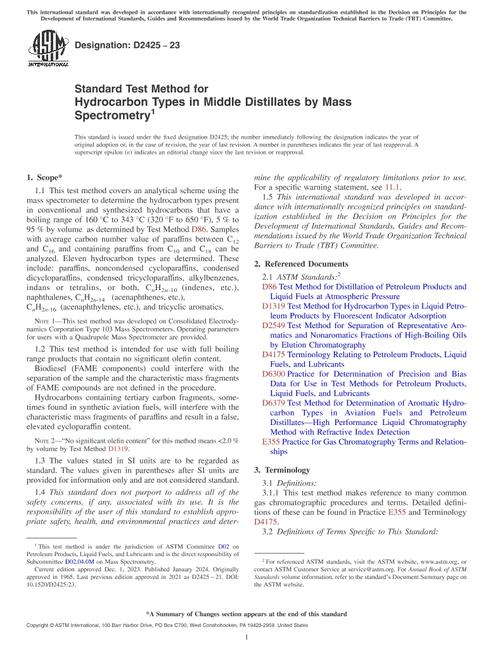
1.1 This test method covers an analytical scheme using the mass spectrometer to determine the hydrocarbon types present in conventional and synthesized hydrocarbons that have a boiling range of 160 °C to 343 °C (320 °F to 650 °F), 5 % to 95 % by volume as determined by Test Method D86. Samples with average carbon number value of paraffins between C12 and C16 and containing paraffins from C10 and C18 can be analyzed. Eleven hydrocarbon types are determined. These include: paraffins, noncondensed cycloparaffins, condensed dicycloparaffins, condensed tricycloparaffins, alkylbenzenes, indans or tetralins, or both, CnH 2n-10 (indenes, etc.), naphthalenes, CnH2n-14 (acenaphthenes, etc.), CnH 2n-16 (acenaphthylenes, etc.), and tricyclic aromatics. Note 1: This test method was developed on Consolidated Electrodynamics Corporation Type 103 Mass Spectrometers. Operating parameters for users with a Quadrupole Mass Spectrometer are provided. 1.2 This test method is intended for use with full boiling range products that contain no significant olefin content. Biodiesel (FAME components) could interfere with the separation of the sample and the characteristic mass fragments of FAME compounds are not defined in the procedure. Hydrocarbons containing tertiary carbon fragments, sometimes found in synthetic aviation fuels, will interfere with the characteristic mass fragments of paraffins and result in a false, elevated cycloparaffin content. Note 2: "No significant olefin content" for this method means
| File Size : | 1
file
, 580 KB |
| Note : | This product is unavailable in Russia, Ukraine, Belarus |
| Number of Pages : | 18 |
| Published : | 12/01/2023 |
| Redline File Size : | 2
files
, 860 KB |