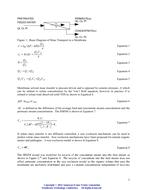
This paper describes model development of solute mass transfer in an integrated membrane
system (Hydranautics LFC1). The data was generated from the St. Johns River Water
Management District (SJRWMD) Water Treatment Project. A wide spectrum of constituents in
source waters is known to contribute to fouling. Membrane foulants are classified roughly into
dissolved organic substances, colloidal or particulate matter, insoluble inorganic compounds, and
biological matter such as bacteria. In order to control organic and colloidal fouling, ferric sulfate
coagulation using Super Pulsator (SP) blanket clarifier followed by dual media gravity filtration
and Zenon (Z) immersed ultrafiltration were used. Monochloramine was used to prevent
biofouling, while antiscalants were added to membrane feed water for scaling control. In this
study, the effects of these pretreatment processes are evaluated by monitoring membrane
productivity change over operating time. Furthermore, pretreatment water qualities are
correlated to membrane performance through mass loading and/or resistance modeling. Includes 29 references, tables, figures.
| Edition : | Vol. - No. |
| File Size : | 1
file
, 430 KB |
| Note : | This product is unavailable in Ukraine, Russia, Belarus |
| Number of Pages : | 16 |
| Published : | 03/05/2003 |