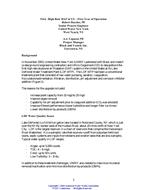
This study investigated the
conventional physico-chemical treatment technologies for removing aluminum, arsenic,
copper, mercury, and selenium from a highly acidic (pH 2.7) groundwater which was
contaminated due to the past industrial activities. A bench-scale study was conducted
to test pH adjustment technologies and metal removal processes. The processes
investigated include chemical coagulation/flocculation followed by sedimentation, dual
media (sand/anthracite) filtration, and granular activated carbon (GAC) adsorption. Lime
and caustic soda were used for pH alteration. Alum and Iron coagulants were jar tested
for their effectiveness in metal removals at different dosages and pH range. The test
data indicates that lime addition is not only effective in pH adjustment but also in
precipitating out almost all the target metals. Caustic soda is shown to be as effective as
lime for pH adjustment. However, caustic soda's cost and handling will be higher. In
addition, lime provided an added benefit of imparting alkalinity. The jar test result showed
that both Iron and Alum coagulants are effective in metal removals. However, for
selenium removal further investigation is recommended. It was also found that chemical
coagulation/flocculation/sedimentation process alone is sufficient to reduce almost all
the target metals to the required effluent limits. The additional treatment processes,
dual filtration and adsorption, may not be needed for polishing the effluent. The existing
water treatment plant practices at the industrial facility were looked into and some
recommendations were made for better and effective operation. Installation of a lime
dose monitoring equipment and a proper settling tank with sludge removal mechanism
may be considered. Includes 2 references, tables, figures.
| Edition : | Vol. - No. |
| File Size : | 1
file
, 320 KB |
| Note : | This product is unavailable in Ukraine, Russia, Belarus |
| Number of Pages : | 9 |
| Published : | 11/15/2004 |