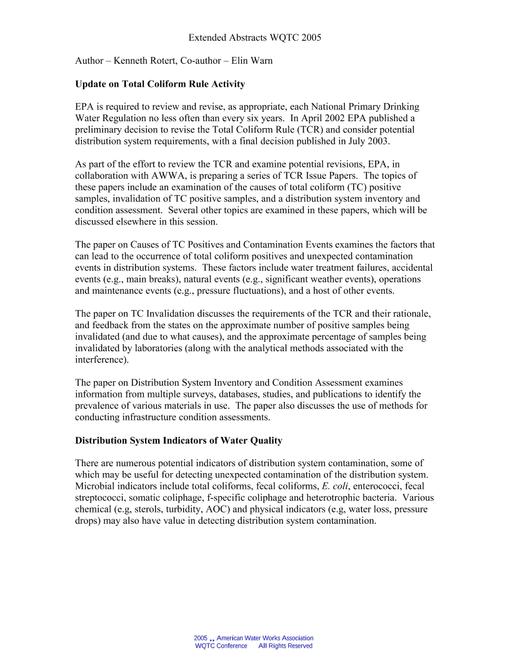
There are numerous potential indicators of distribution system contamination, some of
which may be useful for detecting unexpected contamination of the distribution system.
Microbial indicators include total coliforms, fecal coliforms, E. coli, enterococci, fecal
streptococci, somatic coliphage, f-specific coliphage and heterotrophic bacteria. Various
chemical (e.g, sterols, turbidity, AOC) and physical indicators (e.g, water loss, pressure
drops) may also have value in detecting distribution system contamination. The purpose of this paper is to examine the available information on these indicators.
The strengths and weaknesses of each indicator considered will be identified in terms of
its utility as an indicator of:
distribution system integrity, including issues such as degradation of the
infrastructure, cross-connections, and excess biofilm growth;
fecal contamination, including a range of issues with the potential to allow fecal
contamination to enter the distribution system;
toxic or carcinogenic chemicals, examining indicators of issues such as corrosion
and leaching; and,
waterborne disease outbreaks and endemic disease, examining a range of issues
that could be detected as a result of waterborne disease. Includes abstract only.
| Edition : | Vol. - No. |
| File Size : | 1
file
, 93 KB |
| Note : | This product is unavailable in Ukraine, Russia, Belarus |
| Number of Pages : | 2 |
| Published : | 11/01/2005 |