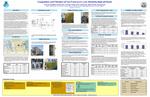
Proper coagulation and filtration
of the Hetch Hetchy supply at the Sunol Valley Water Treatment Plant (SVWTP) has been challenging due to its relatively low
alkalinity (10 to 16 mg/L), low total organic carbon (1.1 to 1.5 mg/L), and high pH levels
(9.2 to 9.7). The high pH results from the addition of lime which is San Francisco Public Utilities Commission's (SFPUC's) corrosion
control strategy for compliance with the lead and copper rule and for protection of the
mortar lining in its transmission pipelines.
Consequently, SFPUC completed a number of process and design improvements to the
SVWTP in 2003 to facilitate treatment and filtration of the normally unfiltered Hetch
Hetchy supply. Chief among these improvements was the ability to inject carbon dioxide
for attaining the proper coagulation pH. SFPUC subsequently conducted a series of pilot
tests to evaluate strategies for conventionally treating and filtering the Hetch Hetchy
supply using aluminum sulfate (alum) as the primary coagulant. Based on the results of
these pilot tests, SFPUC has, in recent years, successfully treated the Hetch Hetchy
supply under full-scale conditions using one of two distinct treatment strategies:
"high" alum dose treatment without coagulation pH adjustment; and, "low" alum dose
treatment with coagulation pH adjustment using carbon dioxide.
Treatment using the "high" alum dose strategy involves an alum dose of 7.5 mg/L at a
coagulation pH of approximately 7.0 whereas treatment using the "low" alum dose
strategy involves an alum dose of 3.0 mg/L at a coagulation pH of approximately 6.5
using carbon dioxide. Although both treatment strategies produce treated effluent in full
compliance with regulatory performance standards and operational objectives, the "low"
alum dose strategy has consistently resulted in higher production levels as measured by
unit filter run volumes without compromising effluent water quality as measured by turbidity and total particle counts.
| Edition : | Vol. - No. |
| File Size : | 1
file
, 850 KB |
| Note : | This product is unavailable in Ukraine, Russia, Belarus |
| Number of Pages : | 1 |
| Published : | 11/01/2009 |