Name:
NR NB 147 ISSUE 2 PDF
Published Date:
07/28/2017
Status:
[ Withdrawn ]
Publisher:
Network Rail
National:
• Infrastructure Projects Advice Note PAN/E&P-E/EE/ESD/0102 ‘Earthing and Bonding for AC Electrification Schemes applying Common Bonding’ describes all bonding requirements and has particular details for signalling equipment.
Note: this PAN is being formed into a Network Rail standard but can be adopted as a Reference Design under CSM-RA legislation [the Common Safety Method]; an LOI will detail the requirements for bonding of small piece parts.
• In dc traction areas bespoke engineering is required
Note EN 50122-1 applies and should form the basis of an engineered solution.
• Where there is a requirement for a safety earth to protect from electric shock from signalling power distribution systems, Company Standard NR/L2/SIGELP/27418 Design, Installation and Testing of Earthing in Signalling Power Systems applies however it should be understood that the preference for signalling power distribution is to adopt Class II [NR/L2/SIGELP/27410 Specification for Class II based Signalling Power Systems] or hybrid protection so that new installations minimise the requirement for a safety earth ‘at the equipment housing’ to protect against electric shock from the signalling power system.
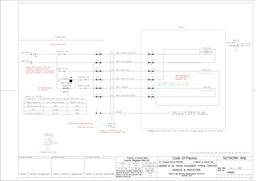
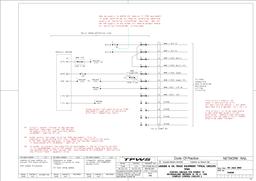
SIGELP/27418 also describes the construction design for a lineside earth and this Notice Board describes the practical minimum necessities of this ‘ground connection’ when used solely for transient and functional purposes.
Purpose
This Notice Board addresses the subject of earthing & bonding of signalling equipment. Earthing & bonding is required primarily:
• to protect equipment from electrical transients and shield from interference [Electromagnet Interference and Compatibility, EMI/EMC];`
• to reduce damage as well as shock, particularly in electric traction areas, by providing a fault current path and facilitating automatic disconnection;
• to provide a functional reference to allow equipment to operate (generally a heritage necessity);
• to protect staff against electric shock from dangerous touch potentials including those from functional signalling power supplies.
It particularly clarifies the approach required for all signalling equipment when earthing and bonding of the electrification system is designed to meet EN 50122-1 and which changes traditional British Practice. It also clarifies the requirements for the form of functional and fast transient earths.
The adoption of these revised approaches will maintain safety and performance and reduce on-track time, construction effort and both initial and through-life costs.
| Edition : | 2 |
| File Size : | 1 file , 160 KB |
| Number of Pages : | 4 |
| Published : | 07/28/2017 |