Name:
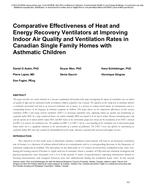
Comparative Effectiveness of Heat and Energy Recovery Ventilators at Improving Indoor Air Quality and Ventilation Rates in Canadian Single Family Homes with Asthmatic Children PDF
Published Date:
2013
Status:
Active
Publisher:
ASHRAE
This paper describes the results obtained in a two-year randomized intervention field study investigating the impact of ventilation rates on indoorair quality (IAQ) and the respiratory health of asthmatic children in Québec City, Canada. The objectives of this study were to determine whethera ventilation intervention will lead to an increased ventilation rate in homes, to a decrease in asthma-related indoor air contaminants and to acorresponding decrease in the frequency of asthmatic symptoms in children. This paper focuses on the comparative effectiveness of heat recoveryventilators (HRV) and energy recovery ventilators (ERV) at increasing ventilation rates, improving indoor air quality and maintaining anacceptable indoor RH. In a large number of homes, the relative humidity (RH) was found to be too low in winter. Because introducing more coldand dry outside air in winter further reduces RH, low-RH homes in the intervention group were chosen for the installation of the ERVs (insteadof HRVs) to increase the ventilation rate. The addition of HRV's or ERV's led to a near doubling of the ventilation rate in intervention grouphomes which led to a significant reduction in the concentration of a number of pollutants. The ERV's were also effective in maintaining anacceptable indoor RH since they avoided the dehumidification of the home, otherwise associated with increased cold supply air rates.
| File Size : | 1 file , 1.1 MB |
| Note : | This product is unavailable in Russia, Belarus |
| Number of Pages : | 8 |
| Product Code(s) : | D-2013IAQConf-22 |
| Published : | 2013 |