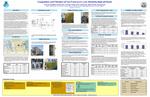
This powerpoint presentation begins by providing a brief overview of biological drinking water treatment. Research objectives include the following: determine the level of disinfection necessary for a biological drinking water treatment; examine inactivation kinetics for a mixed community of microorganisms (most research efforts used pure cultures); and, elucidate mechanisms to explain the observed inactivation kinetics. A lab-scale biologically active carbon reactor was used including a fixed bed reactor containing granular activated carbon (GAC), microbial oxidation of perchlorate (ClO<sub>4</sub><sup>-</sup>) and nitrate (NO<sub>3</sub><sup>-</sup>, with the addition of acetate as electron donor to
promote cell growth. The experimental conditions included: effluent of BAC reactor; monochloramine as disinfectant; batch reactors at pH 8 and 20ºC; Heterotrophic Plate Count (HPC)
using R2A agar; and, the U.S. Environmental Protection Agency's Surface Water Treatment Rule
requiring < 500 colony forming units (CFU) per mL. The results of disinfection experiments are presented, along with modeling of inactivation kinetics, the application of 3 population models, the hypothesis for the second and third phases, the results of the filtration experiments, Colony PCR, and the results of Colony PCR for NF and 5 µm filtrate. Includes table, figure.
| Edition : | Vol. - No. |
| File Size : | 1
file
, 900 KB |
| Note : | This product is unavailable in Ukraine, Russia, Belarus |
| Number of Pages : | 2 |
| Published : | 11/01/2009 |